Power

The accumulation of, the acceptance of, and the use of power are all explored in this section. The individual reigns of some monarchs are looked at such as those from the Tudor period, but so are other leaders, despotic and revolutionary. Contemporary issues of the use of power in a democracy are explored are more complex ideas around power through individual actions and movements in history.

Sort by: Date (Newest first) | Title A-Z
Show: All | Articles | Podcasts | Multipage Articles
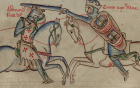
  • Edgar Ætheling: what happened to the boy who never became king?

    Article

    Edgar Ǣtheling, grandson of Edmund Ironside, was the last serious Anglo-Saxon claimant to the throne of Edward the Confessor. In this article, Jamie Page explores how his long life after 1066 sheds a fascinating light on the emerging Anglo-Norman world and its significant impact in Europe and the Middle East.

    Click to view
  • Update: The Princes in the Tower

    Article

    A subject of endless fascination for the historian, the story of the ‘princes in the Tower’ hit the news again recently, following the discovery of Richard III’s body in Leicester and Philippa Langley’s ensuing quest to show that the much-maligned king was not responsible for the princes’ deaths. In this...

    Click to view
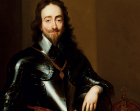
  • Update: Revisiting the Court of King Charles I

    Article

    The reputation of kings, as with all political figures, is problematical. It would be surprising if it were any other way. Yet, the monarchy of Charles I remains as controversial as ever. In this article, Michael Questier looks at two diametrically opposed contemporary accounts of monarchical authority in the Stuart...

    Click to view
  • The nature of Charles I’s government

    Article

    Charlotte Brownhill explores the nature of Charles I’s government. Rather than dismissing this as a disaster, she argues that there were many positive features of his government before the outbreak of the Wars of the Three Kingdoms and suggests that we should consider the difficulties caused by the complexities of...

    Click to view
  • Caroline Court Women, 1625–1669

    Article

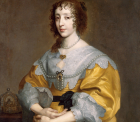
    Aristocratic women at the court of Queen Henrietta Maria from 1625–69 were integral to court life and actively involved in royal service; in court family networks; in dispensing and seeking patronage; and, in political and religious politics. As Sara J. Wolfson shows, it is important to study women at the apex of power...

    Click to view
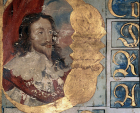
  • Piecing together the life and times of Charles I

    Article

    In this article, Chris R. Langley discusses the sources we use to reconstruct the life and times of Charles I. He explains how historians can use a wide range of sources in creative ways to understand different aspects of political, cultural and religious change in the mid-seventeenth century...

    Click to view
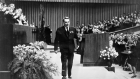
  • Film: Brezhnev's legacy

    Article

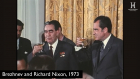
    In this film Dr Edwin Bacon looks back at Brezhnev’s 18 years and how is has been described as an era of stagnation, producing an appetite for change from younger leaders such as Mikail Gorbachev. Dr Bacon reflects that this was a period of relative peace, stability and predictability which...

    Click to view
  • Film: Brezhnev and Détente

    Article

    In this film Dr Edwin Bacon blanks about the modernisation of the soviet union in the 1960s and 70s under Brezhnev, with some scholars predicting that as the East and West evolved, they would eventually converge as modern developed industrialised societies. The problem with convergence theory is that it didn’t...

    Click to view
  • Film: Brezhnev's agenda

    Article

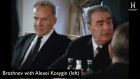
    In this film Dr Edwin Bacon talks about Brezhnev’s change in direction and approach after Khruschev, making collective leadership work and the Kosygin reforms. Whilst there were changes from the era of Khruschev, Brezhnev’s response to the Prague Spring in 1968 showed that some things had not changed. The events...

    Click to view
  • Film: From Khrushchev to Brezhnev

    Article

    In this film Dr Edwin Bacon reflects upon the instability of the Khrushchev era and how Brezhnev positioned himself as the perfect replacement for a Soviet Communist party desperate for stability in the wake of the Cuban missile crisis. Brezhnev would be the first amongst equals looking to move forward...

    Click to view
  • Film: Brezhnev's early life and career

    Article

    In this film Dr Edwin Bacon takes us through Brezhnev’s early life and career: his birth in Ukraine in 1906, the opportunities brought by the revolution, his role in the battle of Ukraine and his eventual arrival to the Politburo at the end of the 1950s. Dr Bacon looks at...

    Click to view
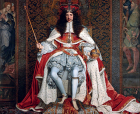
  • The Exclusion Crisis (1679–81)

    Article

    The Exclusion Crisis in the reign of King Charles II was a fierce struggle over the issue of whether the King’s Catholic brother James should be the heir to the throne. At the same time, circumstances promoted an outpouring of polemical pamphlets on a massive scale. Here Gregory Gifford examines...

    Click to view
  • Film: Lenin, the 1905 Russian Revolution and WWI

    Article

    The founders of Communism, Marx and Engels, had created a set of social structures and industrial developments that were believed necessary for Communism to be achieved. Imperial Russia did not fit these conditions and yet at the start of the twentieth century Russian revolutionaries were some of the most active...

    Click to view
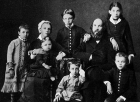
  • Film: Lenin's origins

    Article

    Lenin was born Vladimir Ilyich Ulyanov in 1870. This film takes us through his middle-class origins, how he was radicalised by the world he saw around him, especially following the execution of his brother, and how the future politician and revolutionary developed amongst the extremes of Imperial Russian society. In...

    Click to view
  • Film: Lenin's early thought

    Article

    As Lenin’s own political outlook and beliefs developed so did the European movements of Socialism and Communism. Groups emerged that wanted to radically change society and social structures. Lenin positioned himself as one of the leaders and crucially one of the thinkers behind these new ideas and movements.  Dr Lara...

    Click to view
  • Film: Lenin and the birth of Soviet Russia

    Article

    Having changed the course of Russian society Lenin now needed to secure his Bolshevik survival. Unlike his predecessor he saw no need to continue with the Imperialist policies of a war in Europe. Territory could be sacrificed for control, but would promises and rhetoric be enough to govern among people...

    Click to view
  • Film: Lenin and the 1917 Revolutions

    Article

    You wait a lifetime for a revolution and then two come along at once! Such was 1917 in Russia. As the world seemed in chaos and Russia and the Russian people began to collapse, Lenin and the Bolsheviks saw their opportunity and overthrew the government to create the first communist...

    Click to view
  • Film: Lenin and the Russian Civil War

    Article

    Revolution is never simple. Lenin and the Bolsheviks quickly found that not everyone in Russia or outside of it approved of their new radical agenda. Russia was plunged into a civil war of devastating circumstances. How would its new leader manage and how much were the needs of the people...

    Click to view
  • Film: Lenin's legacy

    Article

    With his body was embalmed and building high statues were erected to him Lenin’s memory seemed secured for ever. Yet how did his memory and his actual legacy differ? Did he really set the course for a future better Russia, or were his ideas of revolution better on paper than...

    Click to view
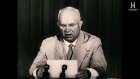
  • Film: Khrushchev - Background

    Article

    In this film, Dr Alexander Titov (Queen's University of Belfast), provides a profile of Khrushchev’s background and personality and how these influenced his politics and ideas. Dr Titov takes us on a journey from Khrushchev's peasant beginnings in Kursk, his rapid rise in the communist party, his role in the purges, to...

    Click to view